Product Highlights
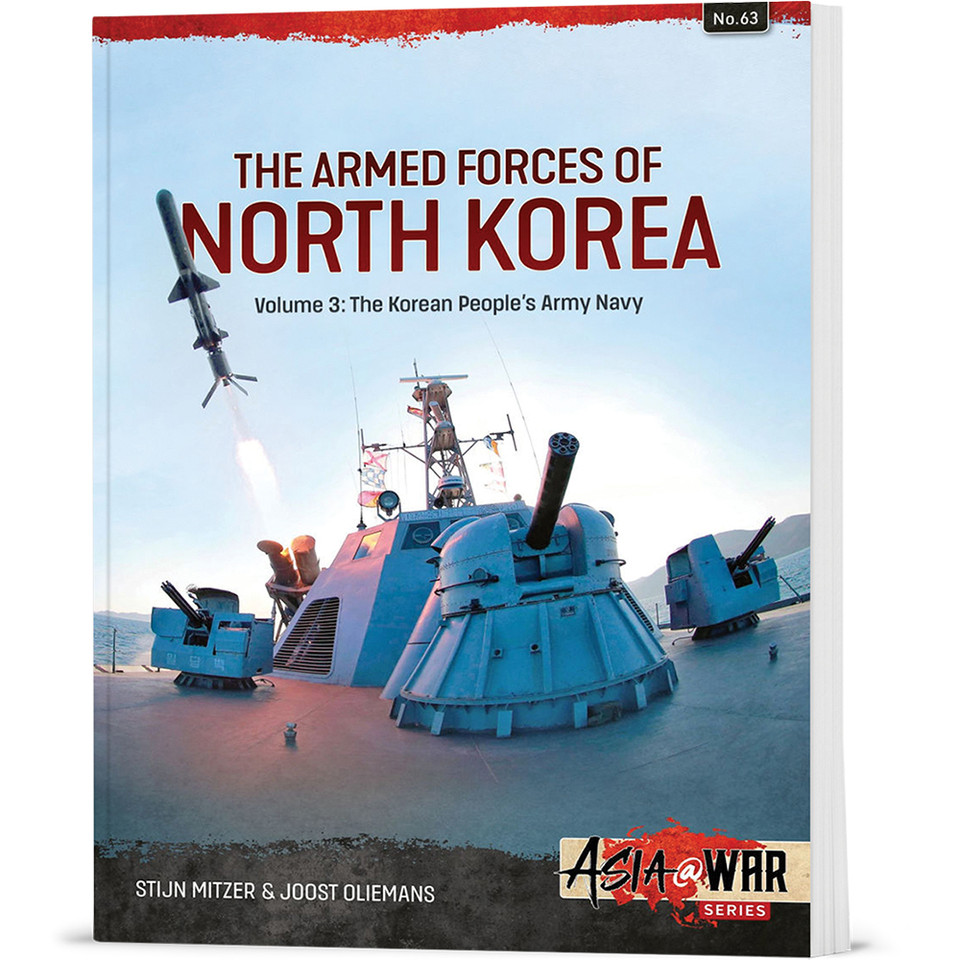
Armed Forces of North Korea Vol. 3: Korean People's Army Navy - (9781806722181)
Drawing on a wide range of open-source intelligence, imagery analysis, and comparative naval assessment, The Armed Forces of North Korea Volume 3 provides a detailed and systematic examination of the organisation, doctrine, equipment, and operational role of the KPAN. It traces the historical development of North Korea's naval forces, explains their command structure and deployment across the East and West Sea fleets, and analyses how geography, technology, and ideology have shaped their missions and limitations.
The book examines the full spectrum of North Korean naval capabilities, including coastal defence forces, fast attack craft, midget and conventional submarines, amphibious and infiltration units, naval aviation, and special operations elements. Particular attention is paid to the navy's role within the DPRK's wider warfighting concept, including infiltration operations, asymmetric maritime warfare, and coordination with ground and missile forces in a potential conflict on the Korean Peninsula.
Rather than treating the KPAN as a relic of the Cold War, this study places recent modernisation efforts, shipbuilding programmes, and evolving operational concepts in their proper strategic context. It shows how, despite severe economic constraints, North Korea continues to maintain a maritime force designed to exploit regional geography, overwhelm defences through numbers and surprise, and complicate any allied response in the opening phases of war.
Features
- 80 pages
- Over 150 photos and illustrations
- Softcover
- Dimensions are 11.5" x 8"
Drawing on a wide range of open-source intelligence, imagery analysis, and comparative naval assessment, The Armed Forces of North Korea Volume 3 provides a detailed and systematic examination of the organisation, doctrine, equipment, and operational role of the KPAN. It traces the historical development of North Korea's naval forces, explains their command structure and deployment across the East and West Sea fleets, and analyses how geography, technology, and ideology have shaped their missions and limitations.
The book examines the full spectrum of North Korean naval capabilities, including coastal defence forces, fast attack craft, midget and conventional submarines, amphibious and infiltration units, naval aviation, and special operations elements. Particular attention is paid to the navy's role within the DPRK's wider warfighting concept, including infiltration operations, asymmetric maritime warfare, and coordination with ground and missile forces in a potential conflict on the Korean Peninsula.
Rather than treating the KPAN as a relic of the Cold War, this study places recent modernisation efforts, shipbuilding programmes, and evolving operational concepts in their proper strategic context. It shows how, despite severe economic constraints, North Korea continues to maintain a maritime force designed to exploit regional geography, overwhelm defences through numbers and surprise, and complicate any allied response in the opening phases of war.